Avatar of Vocabulary Set Linguistique

Ensemble de vocabulaire Linguistique dans Niveau C2 : Liste complète et détaillée

L'ensemble de vocabulaire 'Linguistique' dans 'Niveau C2' est soigneusement sélectionné à partir de sources de manuels internationaux standard, vous aidant à maîtriser le vocabulaire en peu de temps. Compilation complète de définitions, exemples illustratifs et prononciation standard...

Apprendre cet ensemble de vocabulaire sur Lingoland

Apprendre maintenant

prolixity

/prəˈlɪk.sə.t̬i/

(noun) prolixité, verbiage, longueur

Exemple:
The editor advised the writer to reduce the prolixity in his manuscript.
L'éditeur a conseillé à l'écrivain de réduire la prolixité de son manuscrit.

rhetoric

/ˈret̬.ɚ.ɪk/

(noun) rhétorique, éloquence

Exemple:
His powerful rhetoric swayed the crowd.
Sa puissante rhétorique a influencé la foule.

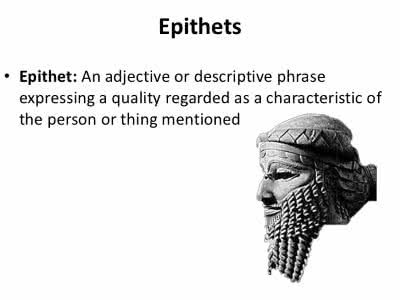
epithet

/ˈep.ə.θet/

(noun) épithète, surnom, qualificatif

Exemple:

The king was often referred to by the epithet 'the Great'.
Le roi était souvent désigné par l'épithète 'le Grand'.

intertextuality

/ˌɪn.t̬ɚ.teks.tʃuˈæl.ə.t̬i/

(noun) intertextualité

Exemple:

The novel exhibits strong intertextuality with classic myths.
Le roman présente une forte intertextualité avec les mythes classiques.

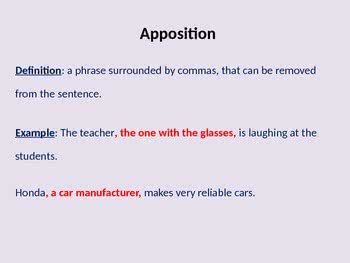
apposition

/ˌæp.əˈzɪʃ.ən/

(noun) apposition, juxtaposition

Exemple:
The artist used apposition of bright and dark colors to create contrast.
L'artiste a utilisé l'apposition de couleurs vives et sombres pour créer du contraste.

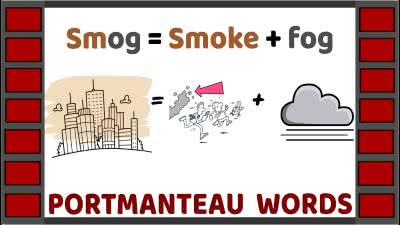
portmanteau word

/pɔːrtˈmæntoʊ wɜːrd/

(noun) mot-valise

Exemple:

The term 'brunch' is a portmanteau word, combining 'breakfast' and 'lunch'.
Le terme 'brunch' est un mot-valise, combinant 'petit-déjeuner' et 'déjeuner'.

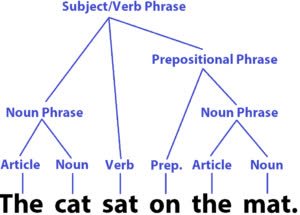
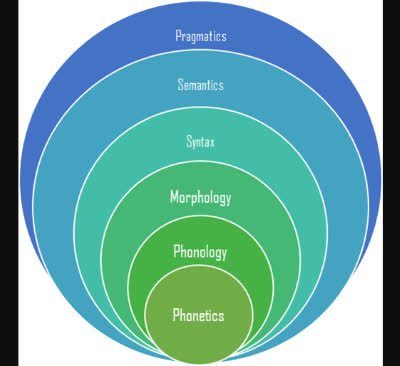
syntax

/ˈsɪn.tæks/

(noun) syntaxe

Exemple:

The grammar checker identified an error in the sentence syntax.
Le correcteur grammatical a identifié une erreur dans la syntaxe de la phrase.

morpheme

/ˈmɔːr.fiːm/

(noun) morphème

Exemple:

The word 'unbreakable' contains three morphemes: 'un-', 'break', and '-able'.
Le mot 'incassable' contient trois morphèmes : 'in-', 'cass' et '-able'.

semantics

/səˈmæn.t̬ɪks/

(noun) sémantique, sens, signification

Exemple:
The study of semantics helps us understand how language conveys meaning.
L'étude de la sémantique nous aide à comprendre comment le langage transmet le sens.

lexicon

/ˈlek.sɪ.kɑːn/

(noun) lexique, vocabulaire, dictionnaire

Exemple:
The legal lexicon can be difficult for laypeople to understand.
Le lexique juridique peut être difficile à comprendre pour les profanes.

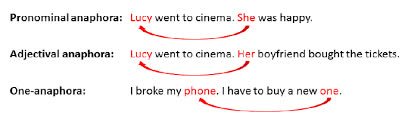
anaphora

/ə.'næf.ə.rə/

(noun) anaphore

Exemple:

Martin Luther King Jr.'s 'I Have a Dream' speech is famous for its use of anaphora.
Le discours « J'ai un rêve » de Martin Luther King Jr. est célèbre pour son utilisation de l'anaphore.

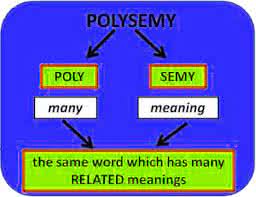
polysemy

/ˈpɑː.lɪ.siː.mi/

(noun) polysémie

Exemple:

The word 'bank' is a classic example of polysemy, referring to a financial institution or the side of a river.
Le mot 'banque' est un exemple classique de polysémie, désignant une institution financière ou le bord d'une rivière.

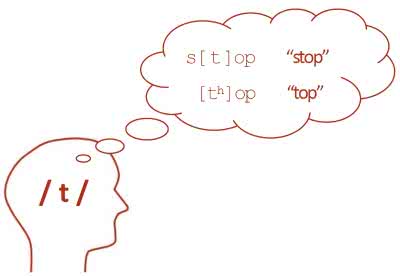
allophone

/ˈæl.ə.foʊn/

(noun) allophone

Exemple:

The aspirated 'p' in 'pin' and the unaspirated 'p' in 'spin' are allophones of the phoneme /p/.
Le 'p' aspiré dans 'pin' et le 'p' non aspiré dans 'spin' sont des allophones du phonème /p/.

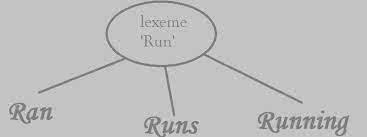
lexeme

/ˈlek.siːm/

(noun) lexème

Exemple:

The words 'run', 'runs', 'ran', and 'running' all belong to the same lexeme 'RUN'.
Les mots 'run', 'runs', 'ran' et 'running' appartiennent tous au même lexème 'RUN'.

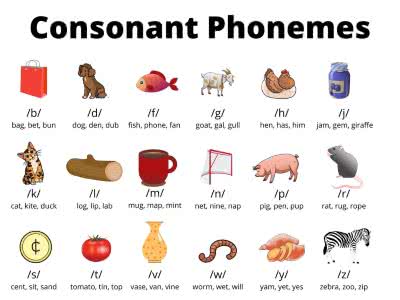
phoneme

/ˈfoʊ.niːm/

(noun) phonème

Exemple:

The word 'cat' has three phonemes: /k/, /æ/, and /t/.
Le mot 'chat' a trois phonèmes : /k/, /a/, et /t/.

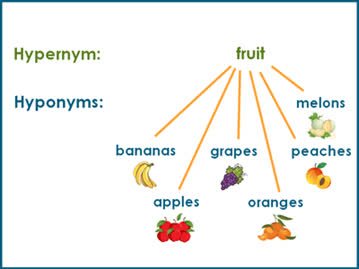
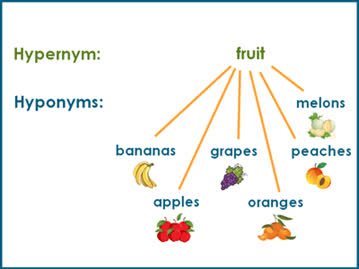
hypernym

/ˈhaɪ.pɚ.nɪm/

(noun) hyperonyme, terme générique

Exemple:
The word 'animal' is a hypernym of 'dog' and 'cat'.
Le mot 'animal' est un hyperonyme de 'chien' et 'chat'.

neologism

/niˈɑː.lə.dʒɪ.zəm/

(noun) néologisme, mot nouveau

Exemple:
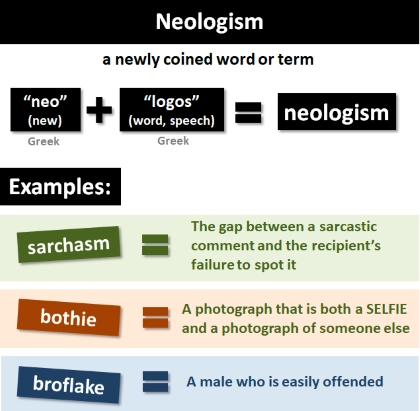
The word 'internet' was once a neologism.
Le mot 'internet' était autrefois un néologisme.

suppletion

/sʌˈpliːʃən/

(noun) supplétion

Exemple:

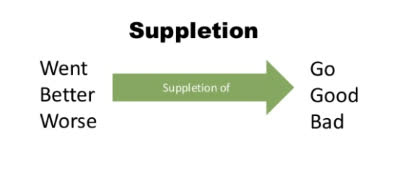
The verb 'go' exhibits suppletion in its past tense form 'went'.
Le verbe 'go' présente une supplétion dans sa forme au passé 'went'.

register

/ˈredʒ.ə.stɚ/

(verb) enregistrer, inscrire, indiquer;

(noun) registre, liste, caisse enregistreuse

Exemple:
You need to register your car with the DMV.
Vous devez enregistrer votre voiture auprès du DMV.

metathesis

/məˈtæθ.ə.sɪs/

(noun) métathèse

Exemple:

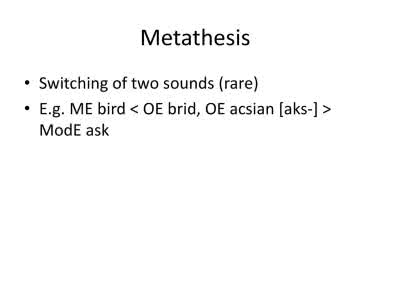
The word 'ask' becoming 'aks' is an example of metathesis.
Le mot 'ask' devenant 'aks' est un exemple de métathèse.

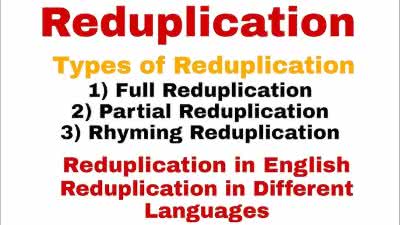
reduplication

/riˌduː.pləˈkeɪ.ʃən/

(noun) réduplication, redoublement

Exemple:

The word 'hush-hush' is an example of reduplication.
Le mot 'chut-chut' est un exemple de réduplication.

clipping

/ˈklɪp.ɪŋ/

(noun) coupe, tonte, coupure de presse

Exemple:
The barber finished the hair clipping quickly.
Le coiffeur a rapidement terminé la coupe de cheveux.

tautology

/tɑːˈtɑː.lə.dʒi/

(noun) tautologie, pléonasme, vérité logique

Exemple:
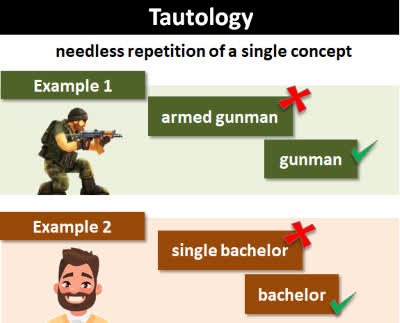
The phrase 'free gift' is a tautology because a gift is inherently free.
L'expression 'cadeau gratuit' est une tautologie car un cadeau est intrinsèquement gratuit.

hyponym

/ˈhaɪ.pə.nɪm/

(noun) hyponyme

Exemple:

In the sentence 'The dog barked loudly,' 'dog' is a hyponym of 'animal.'
Dans la phrase 'Le chien aboyait fort', 'chien' est un hyponyme de 'animal'.

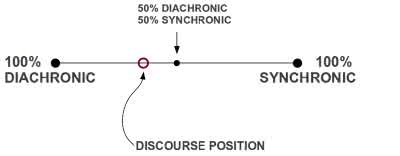
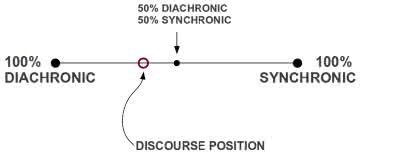
synchronic

/sɪnˈkrɑː.nɪk/

(adjective) synchronique

Exemple:

The linguist conducted a synchronic analysis of modern English.
Le linguiste a mené une analyse synchronique de l'anglais moderne.

diachronic

/ˌdaɪ.əˈkrɑː.nɪk/

(adjective) diachronique

Exemple:

The linguist conducted a diachronic study of English vocabulary.
Le linguiste a mené une étude diachronique du vocabulaire anglais.
Apprendre cet ensemble de vocabulaire sur Lingoland