entropy
US /ˈen.trə.pi/
UK /ˈen.trə.pi/
名詞
1.
熵
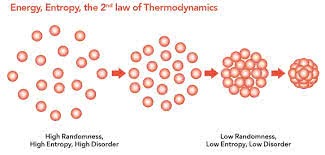
a thermodynamic quantity representing the unavailability of a system's thermal energy for conversion into mechanical work, often interpreted as the degree of disorder or randomness in the system.
範例:
•
The second law of thermodynamics states that the entropy of an isolated system can only increase over time.
熱力學第二定律指出,孤立系統的熵只能隨時間增加。
•
The melting of ice into water is an example of an increase in entropy.
冰融化成水是熵增加的一個例子。
2.
資訊熵
a measure of the disorder or randomness of information or data.
範例:
•
In information theory, entropy quantifies the average unpredictability in a source of data.
在資訊理論中,熵量化了資料源的平均不可預測性。
•
High entropy in a message means it is highly unpredictable and contains more information.
消息中的高熵意味著它高度不可預測並包含更多信息。
3.
混亂, 無序
lack of order or predictability; gradual decline into disorder.
範例:
•
The office descended into complete entropy after the busy week.
忙碌的一周過後,辦公室陷入了徹底的混亂。
•
The city's infrastructure showed signs of increasing entropy.
城市的基礎設施顯示出日益增加的混亂跡象。