entropy
US /ˈen.trə.pi/
UK /ˈen.trə.pi/
명사
1.
엔트로피
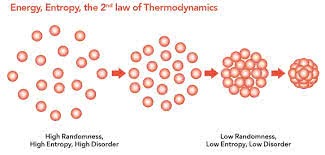
a thermodynamic quantity representing the unavailability of a system's thermal energy for conversion into mechanical work, often interpreted as the degree of disorder or randomness in the system.
예시:
•
The second law of thermodynamics states that the entropy of an isolated system can only increase over time.
열역학 제2법칙은 고립계의 엔트로피는 시간이 지남에 따라 증가할 수밖에 없다고 명시한다.
•
The melting of ice into water is an example of an increase in entropy.
얼음이 물로 녹는 것은 엔트로피 증가의 한 예이다.
2.
정보 엔트로피
a measure of the disorder or randomness of information or data.
예시:
•
In information theory, entropy quantifies the average unpredictability in a source of data.
정보 이론에서 엔트로피는 데이터 소스의 평균 예측 불가능성을 정량화한다.
•
High entropy in a message means it is highly unpredictable and contains more information.
메시지의 높은 엔트로피는 예측 불가능성이 높고 더 많은 정보를 포함한다는 것을 의미한다.
3.
무질서, 혼란
lack of order or predictability; gradual decline into disorder.
예시:
•
The office descended into complete entropy after the busy week.
바쁜 한 주 후에 사무실은 완전한 무질서 상태가 되었다.
•
The city's infrastructure showed signs of increasing entropy.
도시의 인프라는 증가하는 무질서의 징후를 보였다.