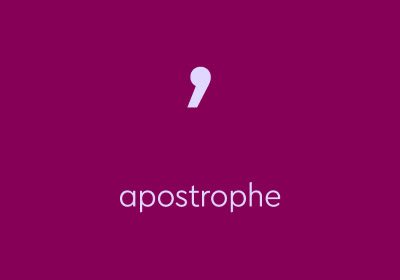
apostrophe
US /əˈpɑː.strə.fi/
UK /əˈpɒs.trə.fi/
명사
1.
아포스트로피
a punctuation mark (') used to indicate possession or the omission of letters or numbers.
예시:
•
The boy's hat was lost, so he used an apostrophe to show possession.
소년의 모자가 없어졌기 때문에 그는 소유를 나타내기 위해 아포스트로피를 사용했다.
•
The word 'don't' uses an apostrophe to show the omission of the letter 'o'.
'don't'라는 단어는 'o' 글자의 생략을 나타내기 위해 아포스트로피를 사용한다.
2.
아포스트로피, 호격
an address to an absent or imaginary person or to a personified abstraction, especially as a rhetorical device in literature.
예시:
•
In his poem, he uses an apostrophe to directly address the moon.
그의 시에서 그는 달에게 직접 말을 걸기 위해 아포스트로피를 사용한다.
•
O, Romeo, Romeo! wherefore art thou Romeo? is a famous example of an apostrophe.
오, 로미오, 로미오! 당신은 왜 로미오인가?는 아포스트로피의 유명한 예이다.
동의어:
관련 단어: